Nobody plans a two-hour session with a match-3 game. It happens by accident: one more level, a timed event that ends at midnight, a board that is nearly solved. The physical cost turns up the next morning as a sore thumb joint or a dull ache along the outside of the wrist, and it is almost always caused by the same three things.
The little finger is doing a job it was not built for
Hold a modern phone one-handed and watch what happens. The device rests on the little finger, the palm presses the back, and the thumb reaches diagonally across a screen that is often larger than the hand span. The little finger is carrying most of the weight of a 200-gram slab for as long as you play. That is the pinky pressure people describe, and it is not imaginary — it is a static load held for an hour.
The fix is not a special way of holding the phone. It is removing the load: rest the device on something, or give the hand a shelf to hold instead of an edge to balance.
The diagonal reach is the second problem
Swapping tiles in the far top corner of a large screen forces the thumb into full extension and slight rotation, over and over. In a puzzle game those movements are repeated hundreds of times per session, always in the same direction, because board layouts do not move. Repetition plus extension plus a fixed angle is the recipe for a sore joint.
Two things help immediately. Reachability gestures — a swipe down on the home indicator on iPhone, one-handed mode on most Android phones — pull the top of the screen into the lower half so the thumb never fully extends. And swapping hands every ten or fifteen minutes spreads the same work across two joints instead of one.
The angle of the screen decides what your neck does
A phone held low in the lap means a head tilted forward for the whole session. Propping the device at roughly 30 to 45 degrees on a table brings the screen closer to eye level and takes the hands out of the equation entirely for the stretches where you are thinking rather than tapping. This is where a folding stand earns its place: not as a gadget, but as a way to stop holding the phone at all.
What we made and why
The Glitchoridex grip is a moulded silicone pad that sticks to the back of a phone or case. Two fingers slide behind it, so the device hangs from the hand rather than balancing on the little finger, and the same pad folds out into a low stand for table play. It is deliberately soft rather than rigid — a hard ring transfers pressure straight into one knuckle, which trades one sore spot for another.
It is not a medical device and it will not fix an existing injury. It removes one specific load, and it makes it easy to put the phone down at an angle where you can still see the board.

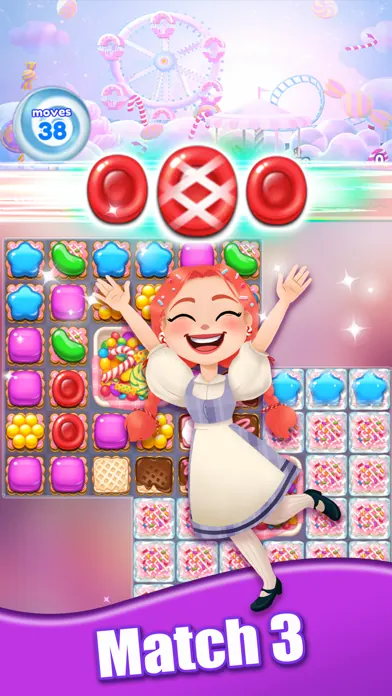
Screenshots from the official Google Play and App Store listings for Sweet Candy Bomb and Candy Go Round. All rights belong to their publishers.
The habits that matter more than any accessory
- Break every twenty to thirty minutes, even for a minute. Energy timers in these games make natural stopping points — use them instead of paying to skip them.
- Swap hands regularly. It feels clumsy for the first two levels and then stops mattering.
- Drop the screen brightness in a dark room. Squinting tightens the neck and shoulders and you will feel it before you notice it.
- Play the tense games sitting up. Order-collecting boards in particular make people hunch, because the whole grid matters at once.
- If a joint is sore the next day, that is the signal to stop for a couple of days. Puzzle levels will still be there.
The grip is available from Sydney for $18.99 AUD by email enquiry. Nothing on this page is medical advice; if pain persists, see a physiotherapist or your GP.